
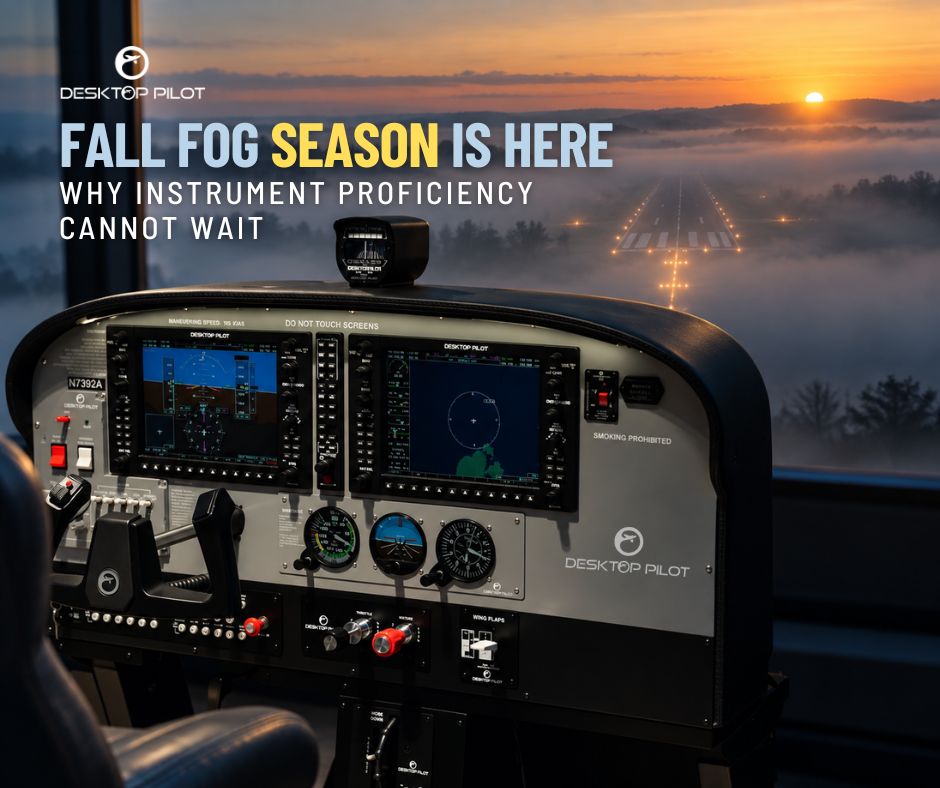
Fall Fog Season Is Here: Why Instrument Proficiency Cannot Wait
Every fall, the same pattern repeats at general aviation airports across the country. Clear skies at sunset give way to a low, dense fog by early morning, the product of cooling ground temperatures and calm autumn air creating a temperature inversion that traps moisture right at pattern altitude. Pilots who flew comfortably all summer under wide-open VFR conditions suddenly find themselves staring at a runway they cannot see from two miles out.
This is not a rare edge case. It is a predictable seasonal pattern, and it is exactly the kind of predictable pattern that rewards preparation done weeks in advance rather than scrambled the morning a flight gets scrubbed.
The Skill That Erodes Fastest
Instrument skills are unusual in how quickly they fade without practice. A pilot can stay reasonably sharp on takeoffs and landings simply by flying regularly for other reasons. Instrument scanning, approach procedures, and staying ahead of a glass panel while task-saturated do not hold up the same way. Without deliberate practice, that proficiency erodes within weeks, not months.
That erosion becomes a real problem the first foggy morning of the season, when a pilot who has not touched an approach plate since spring suddenly needs to fly one for real, under actual low-visibility conditions, with real consequences for getting behind the airplane.
Practicing the Failure Mode Before It Happens
The value of a home glass cockpit setup is not that it replaces real instrument time. It is that it lets a pilot rebuild and maintain that specific, fast-decaying skill on a schedule that has nothing to do with the weather. Running approach after approach on a G1000 Suite, in conditions as marginal as the pilot wants to make them, keeps the scan sharp and the procedures automatic well before the first real fog rolls in.
This matters most for exactly the pilots most likely to get caught off guard: those who fly primarily VFR, build currency through good-weather flying over the summer, and have not deliberately touched instrument procedures since their last flight review. Fall fog does not check anyone’s currency before it forms.
Building the Habit Now, Not in November
The pilots who handle fall and winter low-visibility mornings well are rarely the ones with the most total hours. They are the ones who treated instrument proficiency as something to maintain deliberately, on a schedule, rather than something to relearn under pressure. A full flight simulator setup makes that kind of deliberate practice realistic enough to actually build the habit, not just check a box.
The fog is coming. The only real question is whether the scan is ready before it does.