
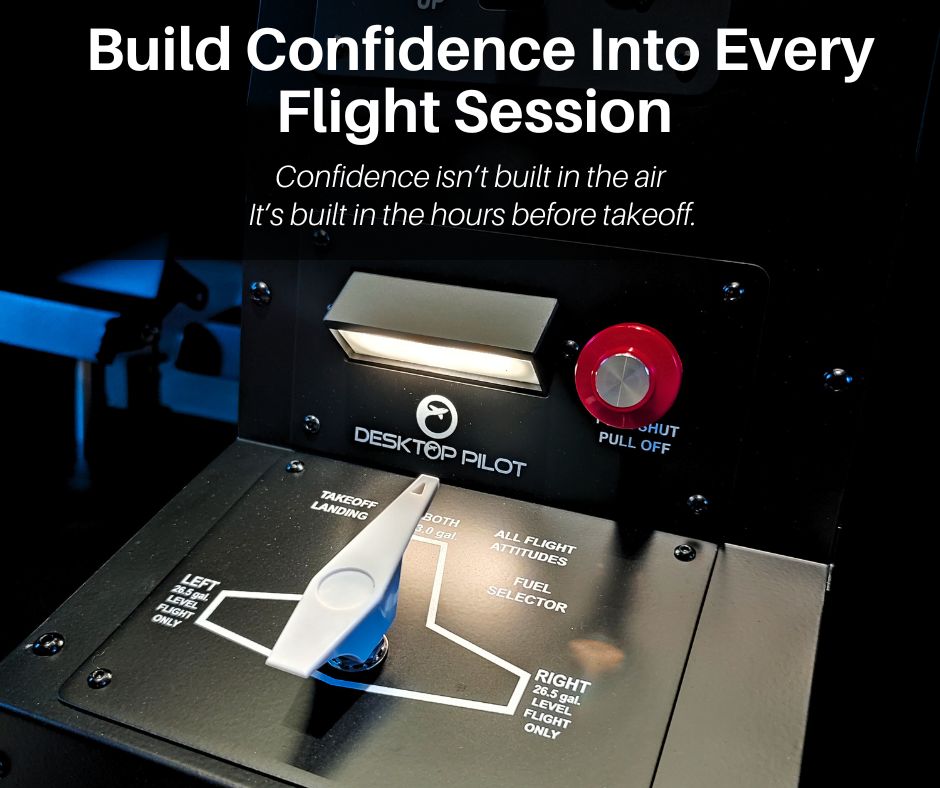
Build Confidence Into Every Flight Session | Professional Flight Simulator Hardware
aviation training simulator, Desktop Pilot, flight simulator hardware, home flight simulator, pilot flight simulator setup, professional flight simulator hardware
Confidence in aviation isn’t improvised. It’s built one intentional flight session at a time.
Whether you’re a private pilot, instrument-rated aviator, or preparing for your next checkride, the way you train on the ground directly impacts how you perform in the air. That’s where high-quality flight simulator hardware becomes more than a convenience, it becomes a competitive advantage.
At Desktop Pilot, we believe confidence is earned through realism, repetition, and reliable tools. This guide breaks down how the right flight simulator setup can transform your training, sharpen your decision-making, and help you show up to every flight prepared.
Why Flight Simulator Hardware Matters for Pilot Confidence
Not all simulator setups are created equal. While software plays an important role, hardware is what builds muscle memory and muscle memory is what reduces workload in the cockpit.
When your controls closely mirror what you fly in real life, your brain doesn’t have to “translate” inputs. That means:
- Faster procedural recall
- Smoother control inputs
- Reduced task saturation
- More confident decision-making under pressure
Confidence comes from knowing exactly how your hands, feet, and eyes work together before the engine ever starts.
From Practice to Proficiency: Training with Purpose
Pilots who use flight simulators effectively don’t just “log time.” They train with intention.
Desktop Pilot flight simulator hardware allows you to:
- Practice emergency procedures without real-world risk
- Rehearse instrument approaches and departures
- Stay current between flights
- Build consistency across sessions
The result? When you’re in the actual cockpit, your reactions are familiar not forced.
What to Look for in High-Quality Flight Simulator Hardware
If your goal is confidence, not just entertainment, here’s what matters most when choosing flight simulator hardware:
- Realistic Control Feel
Your yoke, throttle, and panels should behave like their real-world counterparts. Resistance, travel distance, and responsiveness all matter. - Procedural Accuracy
Switch placement and control logic should support real checklists and flows not shortcuts. - Modular Growth
As your training advances, your simulator should scale with you. The best setups evolve alongside your experience. - Reliability
Training confidence disappears fast when hardware fails. Serious pilots invest in equipment they can trust session after session.
Why Pilots Choose Desktop Pilot
Desktop Pilot flight simulator hardware is built for pilots & enthusiasts who take their training seriously.
Our approach is simple:
- Purpose-built hardware designed for aviation training
- Precision engineering that supports muscle memory and realism
- Modular systems that grow with your mission profile
Every component is designed to support how pilots actually train because confidence doesn’t come from shortcuts.
Learn, Build, and Fly Smarter
Choosing the right hardware is just the beginning. Knowing how to use it effectively is where the real gains happen.
That’s why we share:
- In-depth product walkthroughs
- Setup guides
- Training insights and pilot-focused content
Watch on our YouTube channel: https://www.youtube.com/@pilotdesktop
Visit our website to find the right setup for your training goals.